Trinity Academy
Modern Extension to a Grade A Secondary School Building in Edinburgh
The Project
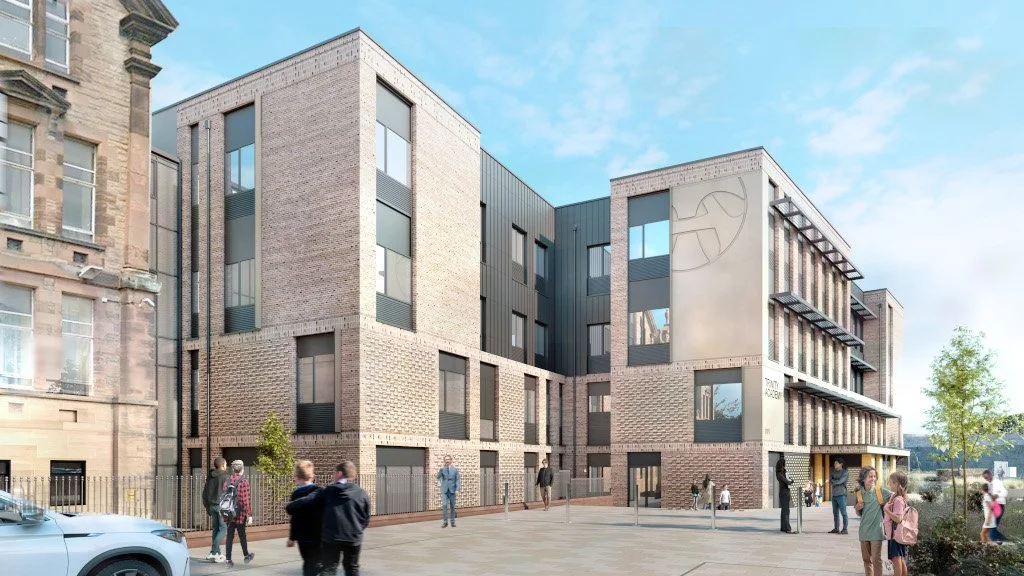
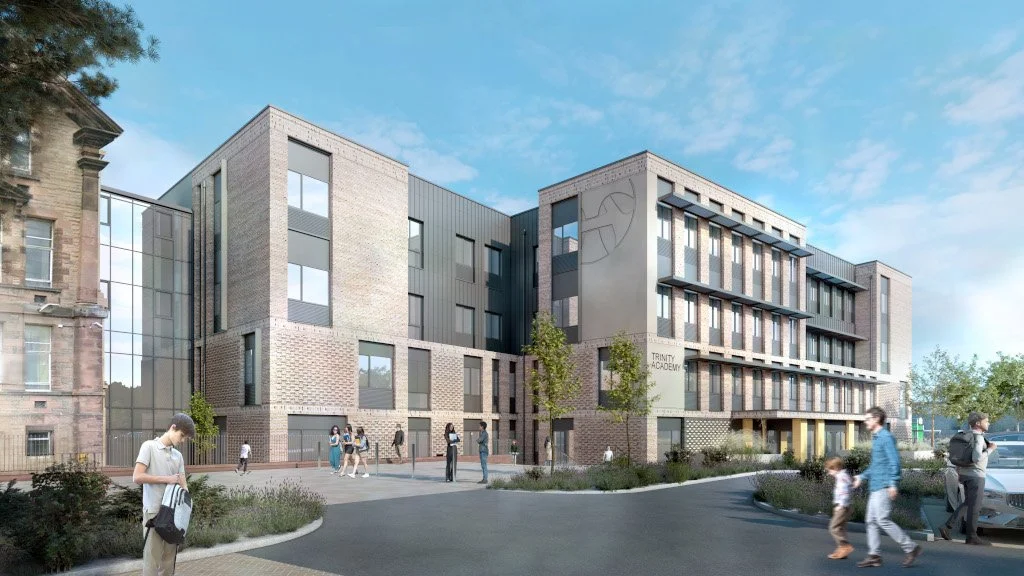
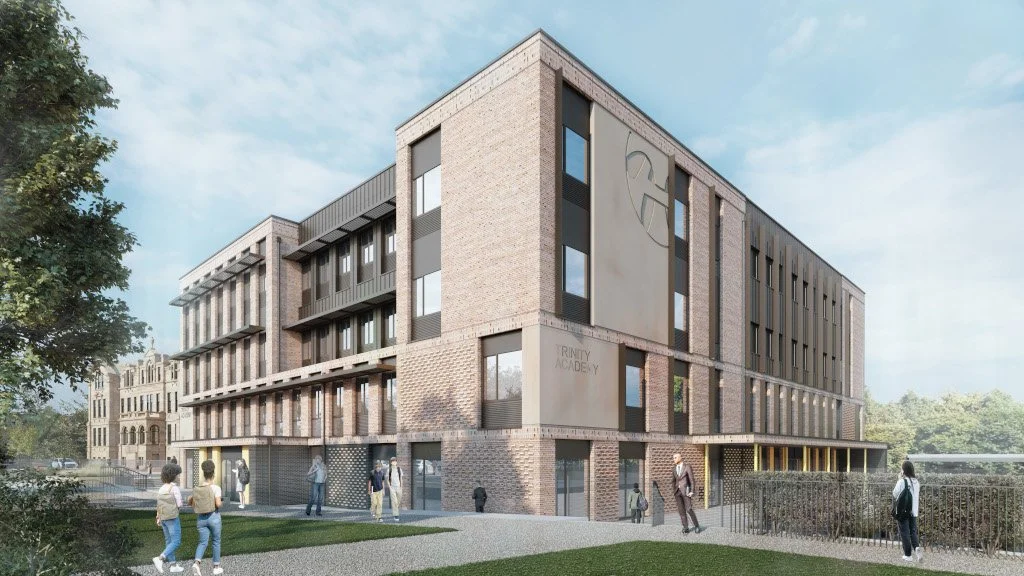
Trinity Academy, a City of Edinburgh Council secondary school in the north of the city, is centred around a prominent Grade A listed building. To support the school’s redevelopment while keeping learning uninterrupted, the project planned the decant of existing facilities and the construction of a three-storey temporary teaching block. This enabled the phased demolition of surrounding structures and the careful integration of a new four-storey extension alongside the historic listed building—maintaining day-to-day operations while transforming the campus for the future.
The Challenge
Delivering a modern extension that connects seamlessly with a Grade A listed building was the defining complexity of the project. Existing floor heights created tight constraints on new floor levels and structural depths at both ground and first floor. Following demolition, the team also needed to survey the existing piles and adapt the new substructure design so the retained elements could be safely and efficiently integrated with the new build.
In parallel, the Council’s net zero targets for 2030 demanded a robust early-stage focus on sustainability, including life cycle assessment and embodied carbon measurement to guide key design decisions from the outset.
Our Solutions
We undertook Concept Stage embodied carbon studies to support informed, evidence-led choices early in the design. This analysis, together with a broader review of construction methods, speed, costs and building air tightness, guided the structural strategy. As a result, an RC flat slab solution was chosen over a steel frame. This approach supported the project’s sustainability objectives while also fulfilling the structural and programme requirements.
To de-risk delivery, we led early coordination workshops with the MEP team to agree structural and services zones—particularly across the critical ground-to-first-floor interface—supporting efficient routing and reducing the likelihood of late-stage clashes.
Following demolition, the existing piles survey identified clashes between retained foundations and the proposed layout. We responded with targeted remedial design, incorporating RC transfer ground beams into the ultimate solutions, resolving existing-versus-new conflicts whilst maintaining programme certainty.