Oregon Timber HQ
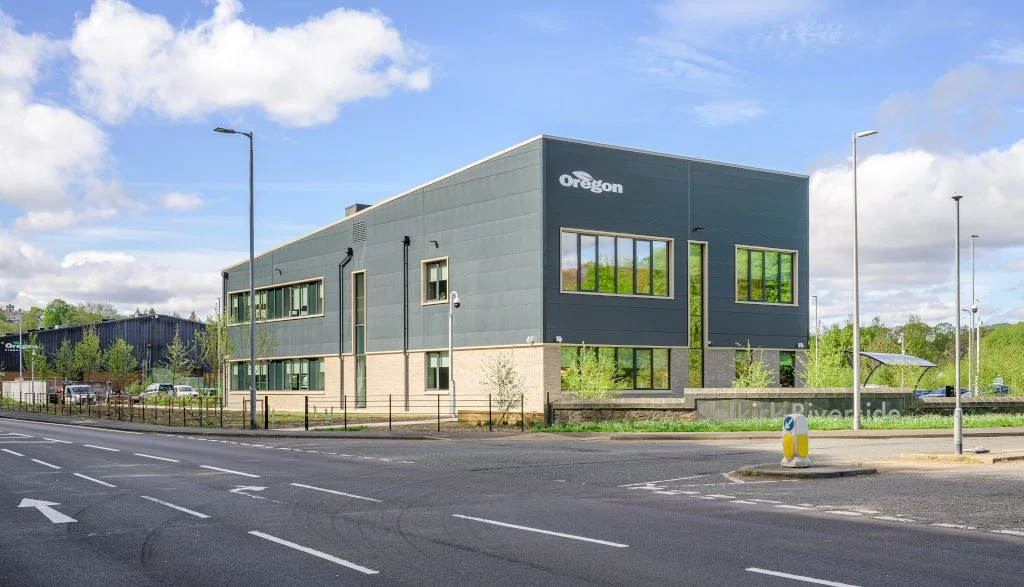
Manufacturing and Office Headquarters Building in Selkirk
The Project
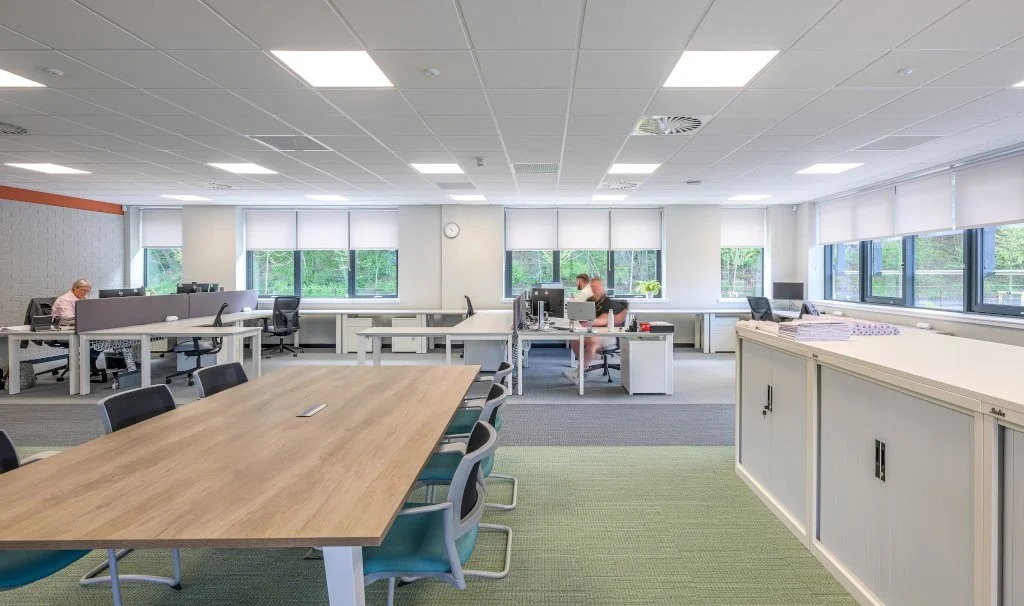
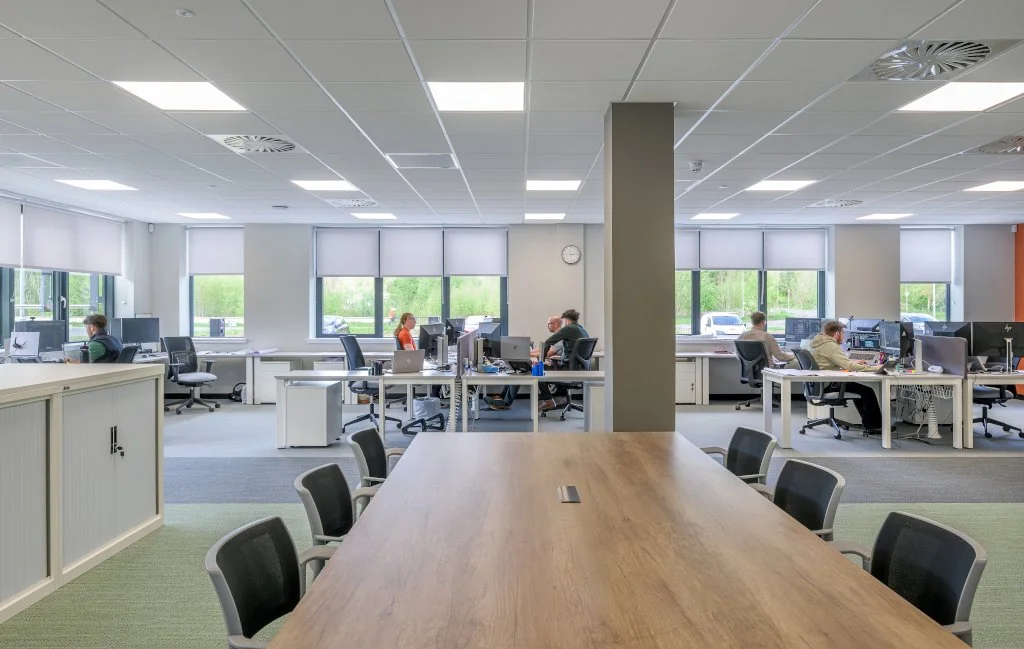
Following the acquisition of Oregon Timber Frame Ltd by Barratt Developments, a plan was initiated to expand the company’s production capabilities. This expansion necessitated not only greater manufacturing capacity but also the development of enhanced office facilities, culminating in the construction of a new headquarters building.
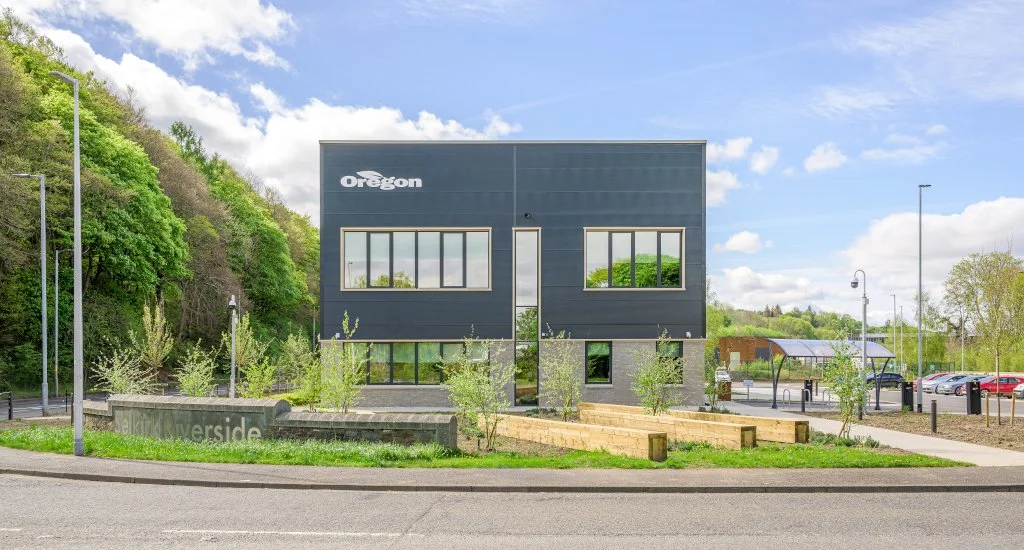
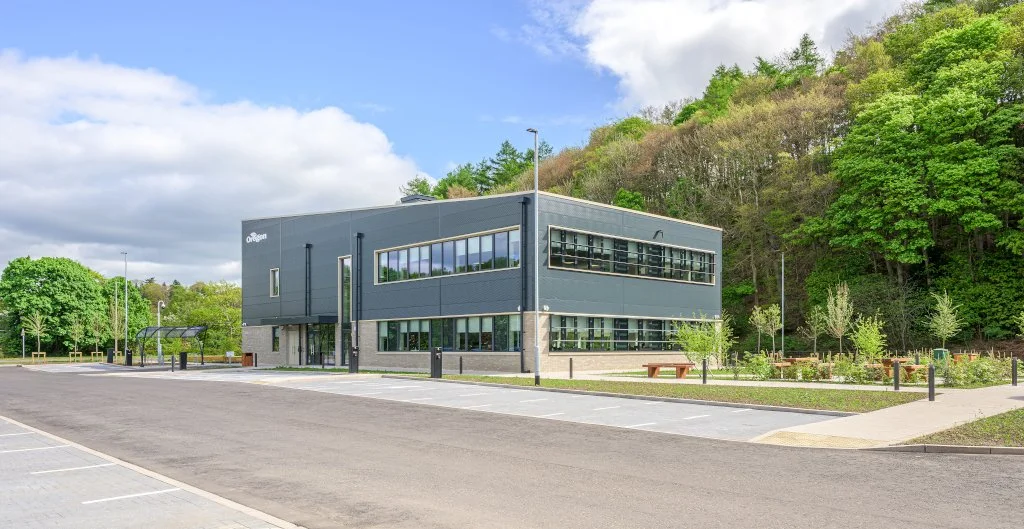
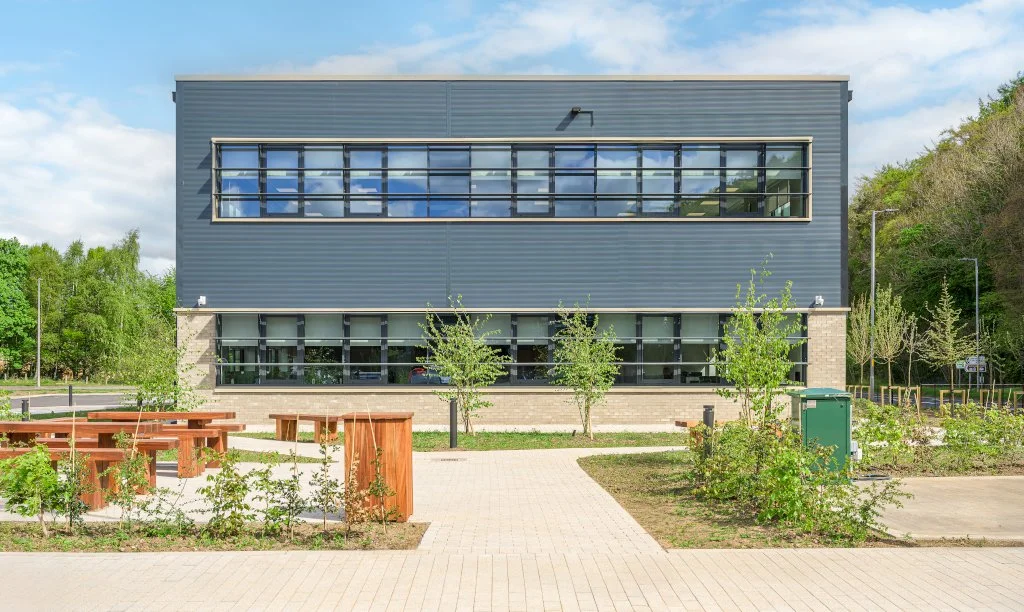
The headquarters is a distinctive two-storey structure featuring a striking sloping roof profile. This architectural element serves a dual purpose, providing visual interest while discreetly concealing external roof plant. Strategically positioned at the entrance to the manufacturing facility, adjacent to the A7, the building ensures maximum visibility and impact for visitors and staff alike.
Located on Dunsdale Road, Selkirk, the project commenced in March 2022 and was completed in January 2025.
The Challenge
The project site was previously home to a disused car garage, which first required careful demolition as part of the redevelopment. While the superstructure was designed to be straightforward, prioritising optimal space utilisation and functionality, the real complexity lay below ground. Addressing the site's underlying conditions demanded innovative solutions and meticulous planning to ensure a smooth construction process.
A particular challenge arose from the existing drainage infrastructure, which was located at a very shallow depth at the connection point. This posed significant complications for surface water attenuation requiring considered engineering approaches to overcome these.
Our Solutions
Addressing the challenge of the shallow existing drainage, surface water was carefully managed and attenuated on site using a purpose-designed detention basin. Integrated seamlessly within the site layout, this basin was coordinated alongside access routes and parking areas. This approach not only reduced the required depth to the invert level but also ensured a successful connection to the existing, shallow drainage network, whilst delivering a solution in line with SuDS best practice
Comprehensive site investigations confirmed the suitability of spread foundations at a shallow depth, which proved advantageous for both cost and buildability. This solution required precise coordination with the shallow drainage system and service routes running beneath the building footprint. This ensured that all necessary infrastructure was accommodated without compromising the structural integrity or functionality of the new building structure.
The superstructure consists of a braced steel frame featuring composite slabs on the first floor and at the plant roof level. A central external plant area divides the sloping roof profile. Each side of the roof maintains independent stability, with horizontal roof girders channelling lateral loads to strategically positioned vertical braced bays.