liberton community campus
Liberton High School Edinburgh
The Project
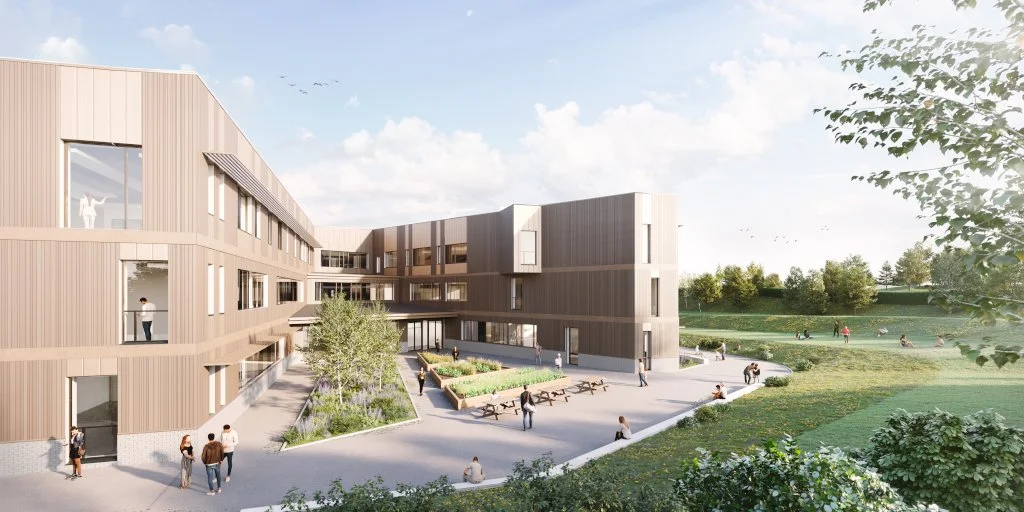
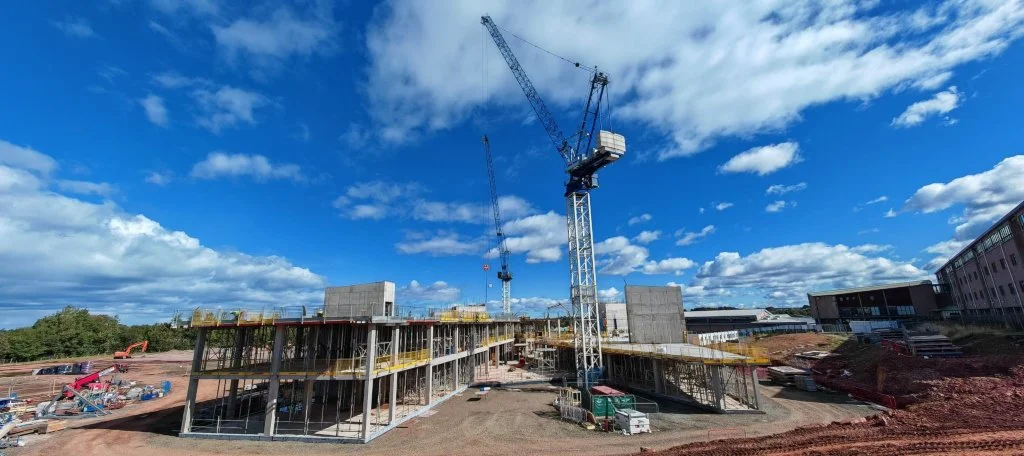
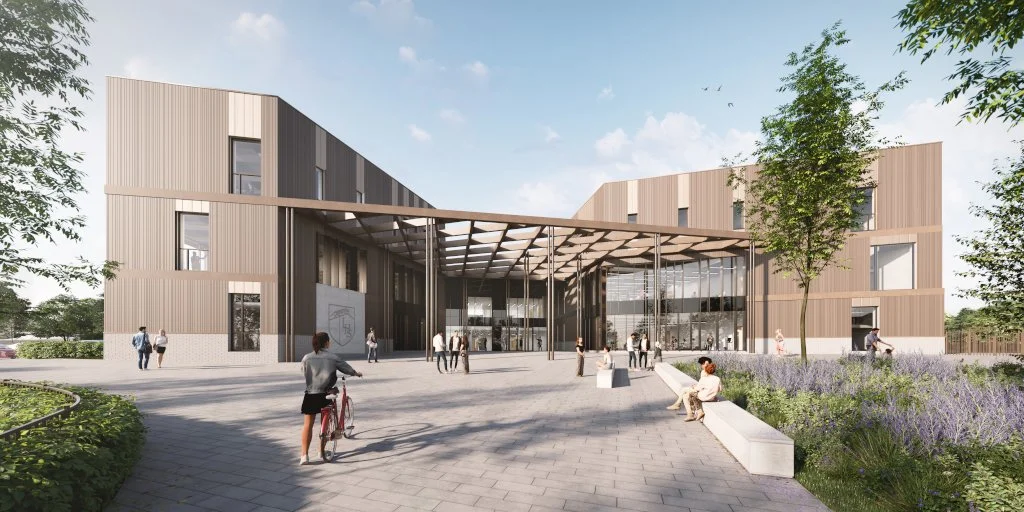
Liberton Community Campus is being delivered for the City of Edinburgh Council, replacing the existing Liberton High School. The new build is positioned on the existing football pitches with the location chosen to optimise solar gain and building orientation in line with Passivhaus design principles (a key element of the client’s brief). The design has been supported by a considered cut-and-fill earthworks strategy to establish an efficient building platform. Shallow pad foundations are formed predominantly within the cut, with trenchfill utilised where construction extends through areas of engineered fill.
The Challenge
With Passivhaus a confirmed client requirement, the choice of frame was a key early decision. A series of structural options were developed and then analysed across the project team. As a design and build contract, Balfour Beatty were engaged from the beginning and their input allowed the frame economics to be considered hand-in-hand with thermal performance and certainty of detail/ quality.
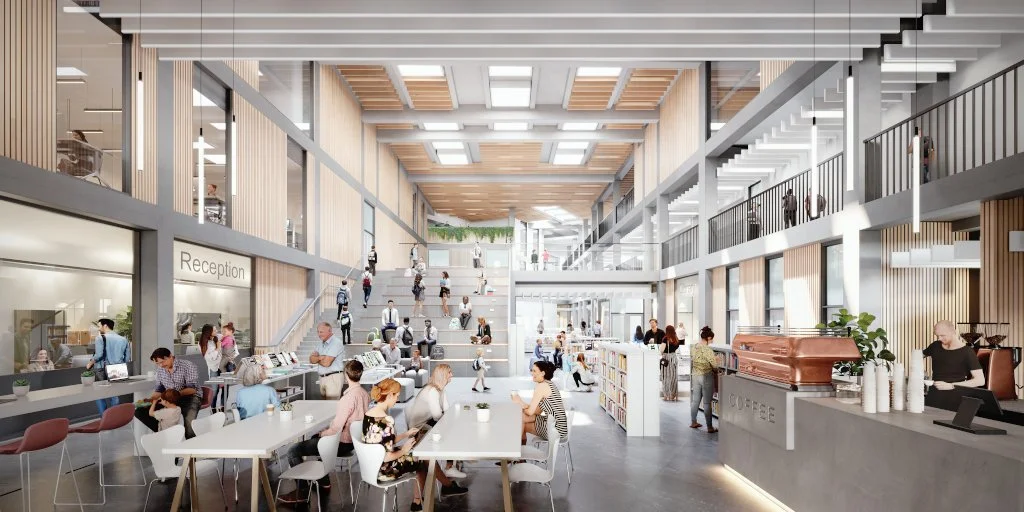
The campus layout evolved as the architectural design developed around a central atrium, requiring ongoing refinement of the primary reinforced-concrete column arrangement and upper-floor plates. In parallel, the largely greenfield setting and adjacent hardstanding required a clear, compliant surface-water strategy, including temporary storage and controlled discharge prior to connection with the existing adopted sewer network.
Our Solutions
We worked closely with JM Architects to develop a rational structural grid that accommodated the evolving footprint while supporting the architectural intent for the atrium space. Early coordination and focused option studies informed space planning decisions, aligning buildability, programme and performance as the design progressed.
For surface water management, we combined large-diameter pipework with appropriate flow controls to provide reliable attenuation and controlled discharge. Locating storage away from areas of solid geology reduced the extent of excavation and sandstone breakout, supporting a more efficient construction sequence.
To maintain Passivhaus performance, thermal breaks were integrated throughout the detailing to preserve a continuous thermal line. This approach was applied to the primary RC columns, elevational brise soleil elements, and the rooftop plant enclosure steelwork. Trial builds were also undertaken in key areas to de-risk delivery, confirming build sequence and constructability with site teams ahead of full installation.